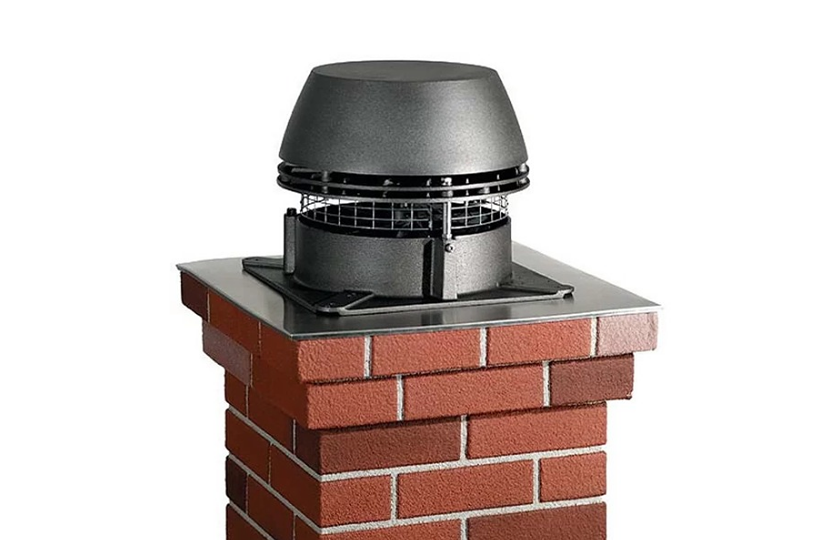

A chimney exhaust fan can sometimes improve draft and help reduce smoke problems, but it cannot correct every underlying chimney or venting defect. Persistent smoke entering a Chicago or Villa Park home may be caused by inadequate draft, a damaged flue, chimney deterioration, an improperly sized liner, negative air pressure, or other combustion and ventilation problems. Adding an exhaust fan may mask symptoms without resolving a potentially dangerous condition.
Why Chimney Draft Problems Create Smoke Concerns
A properly functioning chimney relies on natural draft to move combustion gases upward and safely out of the home. When draft is weak, smoke and other combustion byproducts can spill back into living areas instead of exiting through the chimney.
An exhaust fan may strengthen airflow in certain installations, particularly when natural draft is inadequate under specific operating conditions. However, the fan must be properly selected and installed, and the chimney itself must be evaluated before relying on mechanical assistance.
- Weak Draft: Insufficient upward airflow can allow smoke to move back indoors.
- Cold Chimney: A cold flue may initially produce weaker natural draft.
- Negative Air Pressure: Exhaust appliances can interfere with chimney airflow.
- Blocked Flue: Obstructions can restrict the safe movement of combustion gases.
When A Chimney Liner Problem Is The Real Cause
A chimney exhaust fan cannot substitute for appropriate chimney liner repair when the flue itself is damaged. Cracked, deteriorated, improperly sized, or otherwise defective liners can interfere with safe venting and may expose surrounding masonry to excessive heat and corrosive combustion byproducts.
Older homes may also contain an unlined chimney or a flue that no longer meets the requirements of the connected heating appliance. In these situations, the correct solution may involve chimney liner installation rather than simply increasing exhaust airflow.
Chimney Liner Installation Can Improve Venting Safety
A properly selected liner provides a defined passage for combustion gases and can help protect chimney masonry from heat and corrosive materials. The liner must be appropriate for the appliance, chimney configuration, and fuel type, which is why professional evaluation should precede installation.
For homeowners considering a chimney exhaust fan, inspecting the existing liner first is particularly important. Increasing airflow through a defective flue does not repair cracks, deterioration, improper sizing, or structural deficiencies.
How Chimney Deterioration Can Affect Smoke Control
Chimney deterioration can develop gradually because masonry, mortar joints, liners, and other components are exposed to heat, moisture, freeze and thaw cycles, and combustion byproducts. Chicago-area winters can make moisture-related deterioration especially important to monitor.
Damage may not always be obvious from inside the living space. A professional chimney inspection can help identify deterioration, obstructions, liner damage, and other conditions that could contribute to poor draft or unsafe venting.
Signs Your Chimney Is Leaking Carbon Monoxide
Carbon monoxide is especially dangerous because it is colorless and odorless, meaning you cannot reliably identify exposure by smell. Rather than looking for a specific odor, homeowners should pay attention to warning signs associated with appliance operation and use properly installed carbon monoxide alarms.
Possible symptoms of carbon monoxide exposure can include headache, dizziness, weakness, nausea, confusion, and unusual fatigue. If a carbon monoxide alarm sounds or carbon monoxide exposure is suspected, leave the building and contact emergency services or the appropriate emergency authority rather than attempting to diagnose the chimney yourself.
- Carbon Monoxide Alarm: Treat an activated alarm as an urgent safety warning.
- Recurring Symptoms: Unexplained headaches or dizziness can require immediate attention.
- Combustion Odors: Unusual odors can indicate combustion or venting problems even though carbon monoxide itself has no smell.
- Smoke Spillage: Smoke entering the home warrants prompt professional evaluation.
Can An Exhaust Fan Fix Every Smoke Problem?
No. An exhaust fan may help address a specific draft condition, but smoke problems can originate from several different sources that require different solutions.
For example, a blocked chimney may require obstruction removal, while a damaged liner may require repair or replacement. Negative pressure caused by other exhaust equipment may require a broader ventilation assessment, making diagnosis more valuable than immediately installing a fan.
Why Professional Chimney Evaluation Matters
Smoke problems should be evaluated as a venting and safety issue rather than treated solely as an airflow inconvenience. A professional assessment can examine the chimney, liner condition, appliance connection, termination, draft characteristics, and visible signs of deterioration.
This approach can prevent homeowners from spending money on an exhaust fan when the actual problem requires chimney liner repair, chimney liner installation, obstruction removal, or another corrective measure. Proper diagnosis is especially important whenever combustion appliances are involved.
Protect Your Home From Smoke And Venting Problems
A chimney exhaust fan can be useful in the right application, but it should not be considered a universal solution for smoke problems. If you are experiencing smoke spillage, concerned about chimney deterioration, or need chimney liner repair or chimney liner installation in Villa Park or the greater Chicago area, our team can evaluate the system and identify the appropriate next step. Capital Chimney Corp. provides professional chimney services focused on safe, reliable venting for local homeowners.