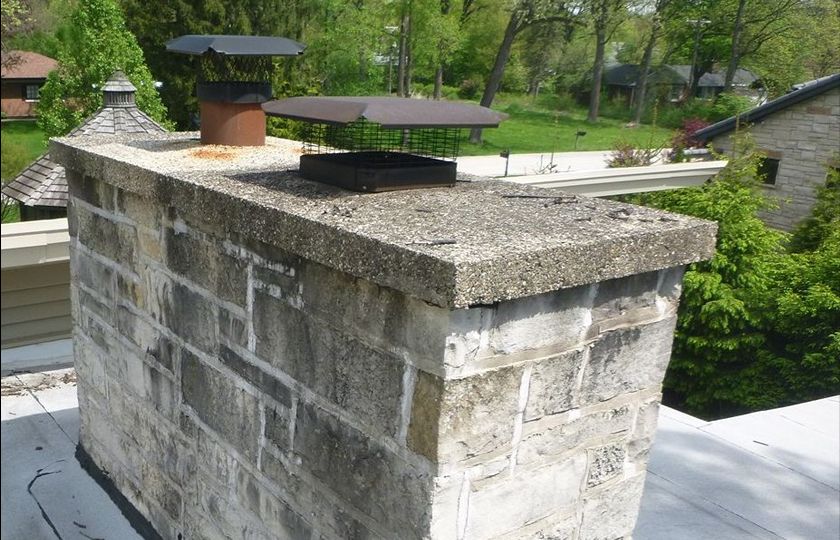

A missing or damaged chimney cap is one of the most common and overlooked causes of chimney damage in Chicago, IL. Our harsh winters, high winds, and freeze/thaw cycles put serious stress on chimney caps year-round. At Capital Chimney Corp., we offer chimney cap repair, replacement, and installation for homeowners throughout the Chicagoland area, protecting your home from water damage, animal intrusion, sparks, and costly chimney repairs down the road.
What Is A Chimney Cap?
A chimney cap covers the flue, protecting fireplaces, furnace flues, and boilers. Using a chimney cap prevents debris, rain, snow, and animals from entering, which can cause blockages or damage that could compromise efficiency and safety. Chimney cap installation plays a crucial role in preventing downdrafts, where outside wind forces smoke and fumes back into your home.
- Preserves The Chimney Liner
- Keeps Pests Out
- Lowers Excess Water
- Prevents House Fires
- Maintains Interior Temperature
Do I Need A Chimney Cap?
If your chimney cap is missing or damaged, it’s essential you get it repaired, replaced, or installed immediately – especially before using your fireplace. The proper spark arrester will save homeowners thousands of dollars in unnecessary chimney repairs or fire damage expenses.
Signs You Need Chimney Cap Repair Or Replacement
Chicago’s weather can take a serious toll on chimney caps over time. Your chimney cap is the first defense against moisture, debris, and animals nesting. Even minor damage can lead to a bigger problem if not addressed. Watch for any changes in the cap’s appearance or signs of damage near your fireplace.
- Visible Rust Or Corrosion: Surface rust may be repairable, but deep rust means replacement.
- Cracked Or Broken Sections: Chicago’s freeze/thaw cycles can damage caps over time.
- Cap Missing Entirely: A chimney without a cap is fully exposed to the elements.
- Animal Activity: Scratching, chirping, or nesting sounds mean something has gotten in.
- Water Stains Near Fireplace: Moisture often signals a missing or damaged cap.
- Downdrafts: Damaged or poorly fitted caps disrupt airflow.
- Clogged Mesh: Screens filled with debris or ice can block ventilation in winter, causing draft hazards.
Common Chimney Cap Issues
Homeowners should look out for these pitfalls when it comes to their hearth. Smaller mesh screens can prevent proper ventilation when it snows or ices in Chicago. That’s why you should ensure the mesh is the right size.
- Small Mesh Screens: Ensure the mesh is sized correctly to allow proper ventilation in all weather, including snow and ice.
- Faulty Installation: A cap that’s improperly fitted or sealed can cause drafts, leaks, or animal entry, even if it looks fine from below.
- Building Codes: Caps that don’t meet local building or fire codes can lead to insurance issues or costly corrections later.
Even if you already have a cover, it might not be installed correctly. If you’re experiencing drafts or infestations, call Capital Chimney to find out if your home needs a special design or a simple repair to a chimney cap. A faulty installation can create more problems with building codes and fire codes and void future homeowner insurance claims.
When To Repair vs. Replace Your Chimney Cap
Not every damaged chimney cap needs a full replacement — but knowing the difference matters. Here’s a quick guide:
Repair your chimney cap when:
- The cap is loose or has shifted due to wind but is otherwise intact
- Minor mesh damage or small rust spots are present
- Fasteners or screws need tightening or replacing
Cap replacement is necessary when:
- The cap is missing entirely
- Rust has eaten through the cap material
- The cap is cracked or structurally compromised
- You’re still using an outdated galvanized steel cap prone to rust
How Long Does A Chimney Cap Last?
Chimney cap lifespan depends on the material and its installation. In Chicago’s harsh climate, weather exposure plays a major role in how long your cap will hold up.
- Galvanized Steel: Typically last 3–5 years before rust and corrosion set in.
- Stainless Steel: Can last 15–25+ years, and are the best choice for Chicago homes.
- Copper Caps: Can last 50+ years, but are more expensive than other options.
When you call Capital Chimney Corp., we assess your cap honestly and recommend the most cost-effective solution. All replacement caps we install are stainless steel with a lifetime warranty built to handle Chicago winters for the long haul. Not sure if you need chimney cap repair in Chicagoland? Our thorough chimney inspection services will give you a clear answer.
Protect Yourself With Chimney Cap Installation
Capital Chimney Corp brings over 75 years of combined experience to every chimney cap repair, replacement, and installation in the Chicago area. Every job is done to meet local building and fire codes. We serve Villa Park, Chicago, and communities throughout Chicagoland — and we offer free estimates on every job.