
Chimney leaks are a common concern for homeowners in Chicago and surrounding communities. This is particularly the case when aging brickwork and deteriorating mortar joints allow water to enter the masonry structure.
Over time, exposure to rain, snow, fluctuating temperatures, and seasonal freeze-thaw cycles can weaken the materials that protect a chimney from moisture. Tuckpointing helps to restore damaged mortar joints, close gaps between bricks, and prevent water intrusion before it leads to extensive structural deterioration.
Understanding How Chimney Tuckpointing Prevents Water Intrusion
Tuckpointing involves removing deteriorated mortar from the joints between bricks and replacing it with fresh mortar. When mortar begins to crack, crumble, or separate from surrounding bricks, rainwater and melting snow can enter the masonry and damage the structure.
Professional chimney tuckpointing in Chicago helps restore these vulnerable areas by creating properly filled, durable mortar joints. Addressing damaged joints early reduces moisture penetration and helps preserve the chimney’s structural integrity.
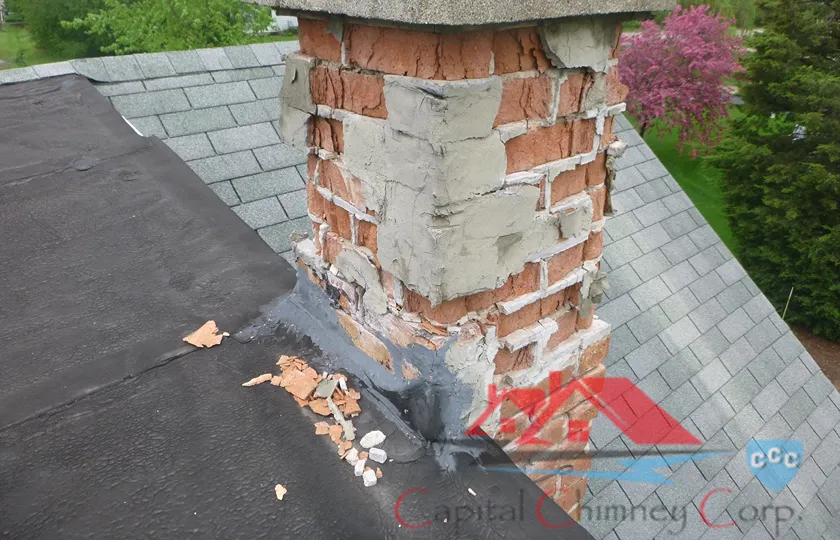
How Open Gaps & Deteriorated Mortar Joints Cause Chimney Leaks
Mortar joints naturally experience wear as brick chimneys age and remain exposed to outdoor conditions. Small openings can develop where mortar has cracked or fallen away, creating pathways for water to enter the chimney.
Once moisture reaches the interior masonry, it can contribute to staining and deterioration that may extend beyond the visible damage.
- Cracked Mortar: Small fractures allow rainwater to penetrate between bricks.
- Missing Mortar: Empty joints expose vulnerable areas of the chimney to moisture.
- Loose Masonry: Deteriorated mortar can reduce the stability of surrounding bricks.
- Recurring Moisture: Continued water exposure accelerates masonry deterioration and increases repair requirements.
Preventing Freeze-Thaw Damage In Chicago Brick Chimneys
Chicago’s winters create particularly challenging conditions for masonry structures. Water entering open mortar joints can freeze when temperatures drop, expand within small cracks, and place pressure on surrounding brickwork. As this process repeats throughout the winter, existing cracks can become larger and cause mortar to deteriorate more rapidly.
Proper tuckpointing reduces the openings where water can collect, limiting the conditions that contribute to freeze-thaw damage. Maintaining sound mortar joints is especially important for older homes throughout Chicago and nearby Villa Park, where years of seasonal exposure may have weakened original masonry.
Protecting Brickwork From Moisture & Premature Brick Decay
When mortar joints deteriorate, the bricks themselves may become increasingly exposed to water penetration. Repeated moisture absorption can contribute to surface flaking and spalling, particularly when trapped water freezes during colder weather. Replacing damaged mortar helps restore the protective joints surrounding the bricks and reduces unnecessary moisture exposure.
However, tuckpointing cannot repair every type of masonry damage. Severely deteriorated or structurally compromised bricks may need individual replacement, making a professional chimney inspection important before beginning repairs.
Why Roof Flashing Matters Alongside Chimney Tuckpointing
Not every chimney leak originates in the brickwork. Roof flashing is the metal barrier installed where the chimney meets the roof, directing water away from this vulnerable intersection.
Damaged, loose, or improperly sealed flashing can allow rainwater to enter the roof structure and create leaks that resemble masonry problems. Effective chimney leak repair should evaluate both mortar joints and roof flashing to identify the actual source of water intrusion.
Warning Signs Your Chimney Needs Professional Tuckpointing
Recognizing mortar deterioration early helps you avoid more extensive chimney repairs. Although some problems are visible from the ground, others develop in less accessible areas around the chimney crown, roofline, and upper masonry sections.
- Cracked, missing, or crumbling mortar between bricks.
- White mineral deposits appearing on exterior masonry.
- Water stains or damp areas near the chimney.
- Loose or shifting bricks along the chimney structure.
- Visible gaps around mortar joints and masonry connections.
- Recurring leaks following heavy rain or snow.
Professional Tuckpointing Versus Temporary Chimney Leak Repairs
Applying surface sealants or patching visible openings may provide temporary relief, but these approaches do not necessarily address deteriorated mortar beneath the surface. Professional tuckpointing removes compromised material and replaces it with suitable mortar, creating a more durable repair. Proper mortar selection is also essential because the replacement material must be compatible with the existing brickwork.
Using mortar that is excessively hard compared with older masonry can contribute to brick damage as the materials respond differently to temperature and moisture changes. Experienced masonry professionals evaluate the existing construction before selecting an appropriate repair method.
Protect Your Chicago Area Chimney With Expert Masonry Care
Damaged mortar joints can allow moisture to enter brick chimneys, contributing to leaks and premature masonry deterioration. Timely tuckpointing helps restore the protective connections between bricks and reduce the risk of more extensive structural repairs. Contact Capital Chimney Corp. to schedule a professional chimney inspection and discuss chimney tuckpointing in Chicago, Villa Park, IL, and surrounding communities.